
By MindFuelHub Team
Have you ever been so immersed in a task that time seemed to vanish? You weren’t overthinking, you weren’t stressed, and the answers were coming to you effortlessly.
Psychologists call this “Flow.” Biohackers call it the ultimate performance state. But neuroscience points to a specific electrical signature in the brain that makes it possible: The Theta Wave.
While modern society pushes us into a chronic state of high-alert stress (Beta waves), the key to superlearning and creativity lies in downshifting your brain into the Theta zone (4–8 Hz). Here is the science behind why Theta is the “Genius Wave” and how you can hack your biology to access it on command.
The Problem: We Are Stuck in “Beta”
For the vast majority of our waking lives, adults operate in Beta frequency (13–30 Hz). This is the state of logical thinking, critical analysis, and alertness. While necessary for survival, high-Beta is also the frequency of anxiety, stress, and rigid filtering.
In Beta, your brain is busy filtering out information to keep you focused on immediate threats or tasks. This makes it incredibly difficult to learn new complex skills or think creatively because your “cognitive cup” is already full.
The Theta Advantage: The Gateway to Superlearning
Theta waves (4–8 Hz) are slow, high-amplitude brainwaves usually generated during deep meditation, REM sleep, or the “twilight” state just before drifting off.
Neuroscience has discovered that Theta is not just about sleep; it is the biological requirement for neuroplasticity.
1. The Hippocampus Activation
The Hippocampus is the part of the brain responsible for converting short-term memory into long-term memory. Studies suggest that Theta oscillations effectively “turn on” the Hippocampus. When your brain resonates in Theta, you are biologically primed to absorb information without the critical rejection that happens in Beta. This is often referred to as “Superlearning.”
2. The “Eureca” Chemistry
When the brain enters Theta, it triggers a cascade of neurochemicals associated with flow and creativity, including:
- Acetylcholine: Vital for focus and memory retention.
- GABA (Gamma-Aminobutyric Acid): A neurotransmitter that calms nervous activity, reducing the “noise” of anxiety.
- Endorphins: Which provide the feeling of well-being associated with the Flow state.
Why Children Learn Faster (The Theta Connection)
Have you ever wondered why a 5-year-old can learn a second language effortlessly, while adults struggle for years?
Neuroscientists have found that children spend a significant portion of their waking hours in a Theta-dominant state. They are literally walking around in a state of open hypnosis and superlearning. As we age, our brains become more rigid and shift into Alpha and Beta dominance. The “Genius Wave” didn’t disappear; we just forgot how to access it.
How to “Hack” Your Way Back to Theta
You don’t need to be a Zen monk with 20 years of meditation experience to reach this state. This is where Brainwave Entrainment comes in.
The brain has a tendency to synchronize its electrical pulses to external rhythms—a phenomenon known as the Frequency Following Response (FFR).
By using specific audio technology (such as Binaural Beats or Isochronic Tones) engineered at the 4–7 Hz range, you can guide your brain from a chaotic Beta state down to a coherent Theta state in as little as 7 minutes.
The “Hard Way” vs. The “Smart Way”
Knowing the science is one thing; applying it is another.
You could try to reach this state through traditional meditation. But let’s be honest: in our distraction-filled world, quieting the mind for 40 minutes a day is nearly impossible for most people. It can take years of disciplined practice to reliably access the Theta state on command.
But neuroscience has given us a shortcut. A way to bypass the years of struggle and “flip the switch” directly.
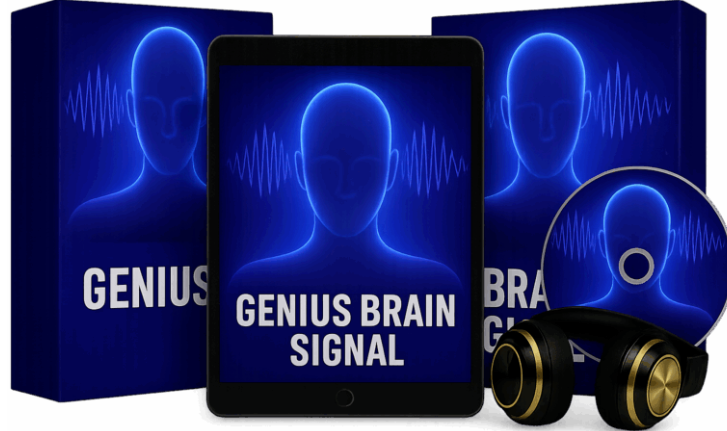
Enter: The Genius Brain Signal
You don’t need a Himalayan cave. You just need 7 minutes and a pair of headphones.
The Genius Brain Signal is the first soundwave technology specifically engineered to target and reactivate the dormant Theta power in your brain. Based on research that connects the 3,000-day-old brain (the creative genius of a child) with advanced brainwave entrainment, this is not just meditation—it is biological synchronization.
Most personal development tools fail because they try to change your mindset while your brain is still stuck in stress-mode (Beta). The Genius Brain Signal works differently. It targets the hardware first.
By simply listening to this specific frequency for 7 minutes a day, you can:
- Reconnect with the intuitive power you had as a child.
- Dissolve the mental fog that blocks deep focus.
- Trigger the “Eureca” moments that solve complex problems effortlessly.
Genius Brain Signal Review: Does Soundwave Tech Work?
“The premise is bold: Listen to a specific audio track for 7 minutes, and soundwave technology will ‘guide’ your brain from Beta (Stress) to Theta (Flow). Is it legitimate science or just placebo? I put my headphones on to find out.”
🧠 The Quick Verdict: Genius Brain Signal
⭐ Rating: 4.9/5 (Flow State Tool)
🎯 Goal: Instant Focus & Creativity
🏆 Best For: Writers, Students & Creators
🔑 Key Feature: Theta Wave Entrainment
How It Works: The Science of “Neural Entrainment”
“This isn’t just ‘relaxing music.’ It uses a process called Brainwave Entrainment. By playing two slightly different frequencies in each ear (Binaural Beats), your brain naturally tries to match the difference.
Genius Brain Signal targets the specific Theta frequency (4-8 Hz). It essentially ‘hacks’ your hippocampus (the brain’s memory center), forcing it to wake up and sync with the audio. Instead of fighting for focus, you are gently pulled into it.”
My Experience: The “7-Minute” Test
“I listened to the track first thing in the morning.
- Minutes 1-3: My mind was still racing.
- Minutes 4-7: A sudden calm washed over me. Not sleepiness, but a ‘quiet alertness.’
When I started working immediately after, I wrote 1,000 words in an hour without checking my phone once. The ‘noise’ was gone.”
Pros & Cons
- The Good: It’s effortless (passive listening). It acts faster than caffeine without the jitters. It’s a digital download, so you get instant access.
- The Bad: You must use headphones for it to work correctly. It requires daily consistency to retrain your brain permanently.
Final Thoughts: A Digital Nootropic?
“If you feel stuck in a creative rut or overwhelmed by brain fog, Genius Brain Signal is cheaper and safer than smart drugs. It is a tool for the modern age—using technology to fix the distraction that technology caused.
Don’t let your brain remain stuck in the rigid, stressful frequencies of the daily grind. Tap into the frequency of flow.
https://mindfuelhub.blog/geniusbrainsignal
References
- On Theta and Memory:
- Context: Research showing the link between Theta oscillations and the Hippocampus.
- Source: Hasselmo, M. E. (2005). What is the function of hippocampal theta rhythm? – Linking behavioral data to phasic properties of field potential and unit recording. Hippocampus, 15(7), 936-949.
- On The “Flow” State:
- Context: The foundational definition of Flow and optimal experience.
- Source: Csikszentmihalyi, M. (1990). Flow: The Psychology of Optimal Experience. Harper & Row.
- On Brainwave Entrainment (FFR):
- Context: Evidence that sound can alter brain states.
- Source: Huang, T. L., & Charyton, C. (2008). A comprehensive review of the psychological effects of brainwave entrainment. Alternative Therapies in Health and Medicine, 14(5), 38.
- On Creativity and Theta:
- Context: Studies showing that alpha-theta training increases creative performance.
- Source: Gruzelier, J. (2009). A theory of alpha/theta neurofeedback, creative performance enhancement, long distance functional connectivity and psychological integration. Cognitive Processing, 10(1), 101-109.
Leave a Reply